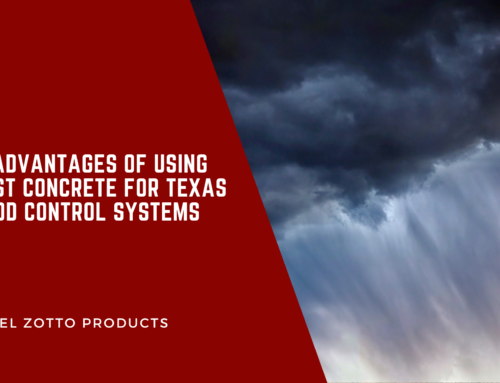
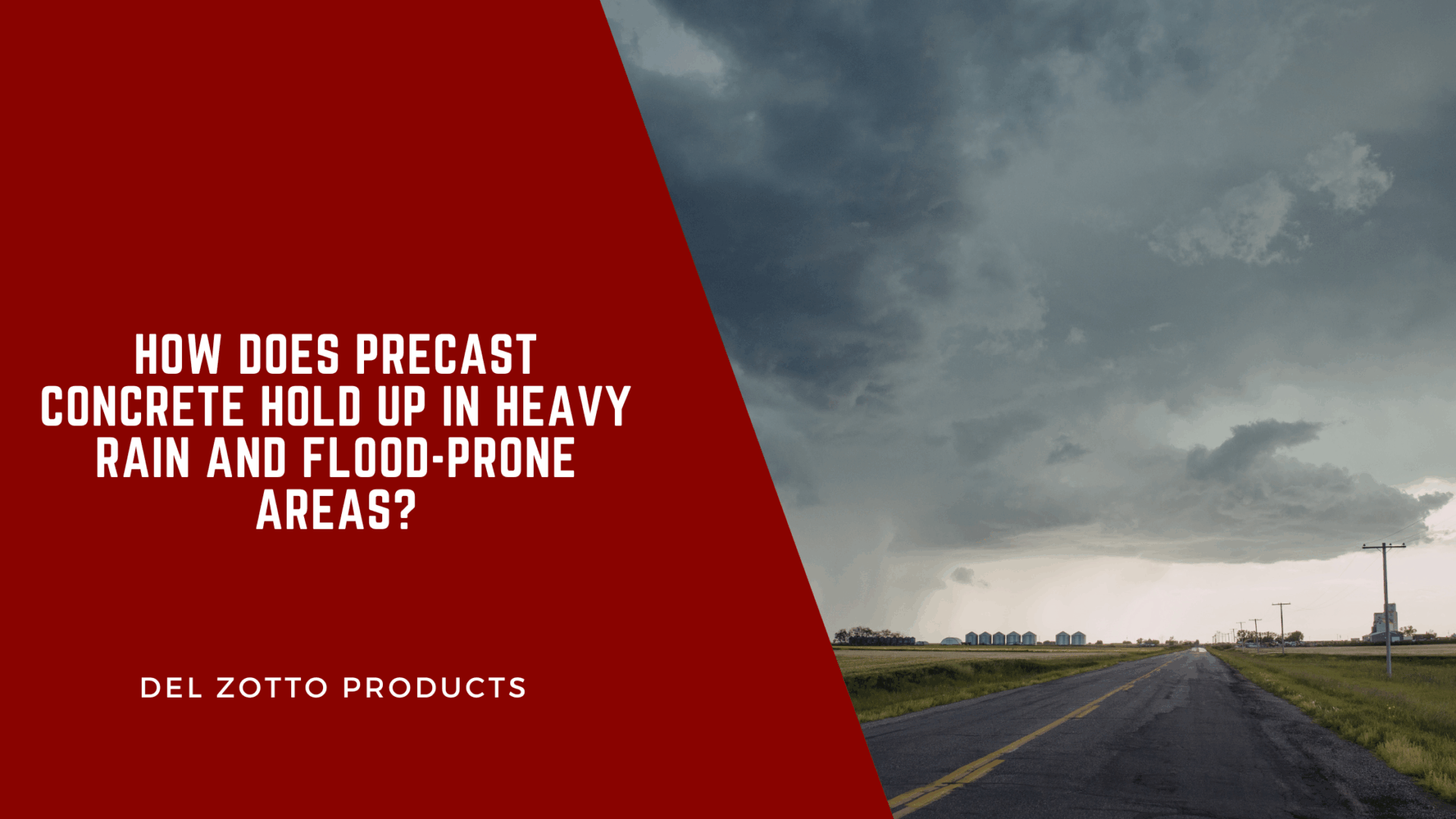
Spring in Texas often brings heavy rain, sudden storms, and the risk of flash flooding. For contractors, municipalities, and property owners, that raises an important question: how well do your materials perform when conditions turn wet and unpredictable?
From intense downpours to standing water and shifting soil, excess moisture can quickly expose weaknesses. That’s why choosing materials that hold up in flood-prone conditions is critical, especially during peak storm season.
So, how does precast concrete perform in these environments?
Why Heavy Rain and Flooding Are a Concern in Texas
Across Texas, spring storms can create fast-moving water and drainage challenges that put pressure on infrastructure.
Common issues include:
- Soil erosion and ground instability
- Flash flooding in low-lying or developed areas
- Water buildup that overwhelms drainage systems
- Long-term exposure to moisture and runoff
- Safety risks from slick or unstable surfaces
Materials that cannot handle these conditions often deteriorate faster, leading to repairs, delays, and added costs.
How Precast Concrete Performs in Wet Conditions
Precast concrete is widely used in areas where durability and consistency matter, especially in regions that experience frequent storms.
Because it is produced in a controlled setting, precast concrete is dense and uniform. This helps it perform more reliably when exposed to water compared to materials that may have inconsistencies from on-site conditions.
Key advantages include:
Strong, Reinforced, Dense Structure
Precast concrete resists excess moisture absorption, helping maintain its strength over time.
Resistance to Erosion and Washout
In areas affected by heavy rain or flooding, precast products stay in place and hold their shape, even when surrounding soil shifts.
Consistent Quality
Since production is not affected by weather, the final product is more uniform, reducing the risk of weakness if poured onsite..
Built for Stormwater Management and Drainage
Managing water flow is critical in flood-prone areas, especially in parts of Texas that experience sudden, heavy rainfall.
Precast concrete is commonly used in:
- Storm drains
- Culverts
- Catch basins
- Utility structures
These systems help move water efficiently, reduce pooling, and lower the risk of flooding. Their durability allows them to continue functioning during and after severe weather events.
Holding Up in Harsh Environmental Conditions
In Texas, heavy rain is often combined with other environmental stressors, including:
- Runoff that may contain chemicals or debris
- Rapid changes between dry and saturated soil
- Occasional freeze-thaw cycles in some regions
Precast concrete holds up well under these conditions. Its durability helps limit cracking, surface wear, and long-term damage, making it a dependable option for demanding environments.
Faster Installation During Unpredictable Weather
Spring weather in Texas can delay construction timelines. Precast concrete helps reduce that risk.
Because products are made ahead of time and delivered ready to install:
- Installation is quicker
- On-site labor is reduced
- Projects stay closer to schedule, even with weather interruptions
This is especially valuable during months when storms can slow progress.
Why Precast Concrete Is a Smart Choice for Texas Projects
For projects exposed to heavy rain and potential flooding, precast concrete offers clear advantages:
- Long-lasting durability in harsh conditions
- Reliable performance during heavy rain events
- Resistance to erosion and environmental wear
- Effective stormwater and drainage solutions
When heavy rain and flooding are a concern, choosing materials that can handle the conditions is key. Precast concrete offers the durability, reliability, and performance needed to stand up to Texas weather and keep your project on track. Contact Del Zotto Products of Texas today to learn more about available precast solutions or to get started on your next project.